
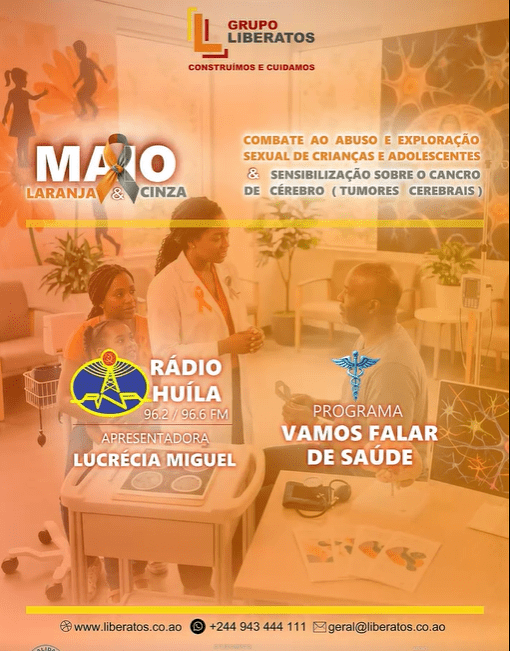
Ao longo do mês de Maio, o programa “Vamos Falar de Saúde” colocou em debate desafios que afectam directamente crianças, trabalhadores, pessoas com dor crónica e pacientes em processo de reabilitação. Mais do que transmitir informação, as emissões ajudaram a esclarecer dúvidas frequentes, combater preconceitos e incentivar a procura atempada dos serviços de saúde.
Esclarecimento sobre o pé boto ajuda a combater o abandono do tratamento
A abordagem sobre o pé boto trouxe à discussão uma condição que, apesar de tratável, ainda enfrenta barreiras relacionadas com o desconhecimento e o abandono precoce do tratamento.
Durante o programa, os especialistas alertaram para a importância do diagnóstico precoce e da continuidade dos cuidados médicos. A mensagem ganha ainda mais relevância quando se considera que dezenas de crianças já beneficiaram de campanhas cirúrgicas realizadas no Lubango.
Além disso, o debate destacou o papel das famílias no sucesso da recuperação. Ao esclarecer dúvidas e desmistificar a condição, o programa contribuiu para reduzir receios e reforçar a adesão ao tratamento. Consequentemente, aumenta-se a possibilidade de garantir às crianças uma vida mais activa e integrada socialmente.
Fibromialgia: dar voz a uma doença frequentemente incompreendida
A discussão sobre a fibromialgia permitiu lançar luz sobre uma condição muitas vezes invisível para a sociedade. Como os sintomas nem sempre aparecem em exames complementares, muitos pacientes enfrentam dificuldades para obter compreensão e apoio.
Nesse contexto, a participação da fisioterapeuta Alexandra Capita ajudou a esclarecer que a doença é real, tem impacto significativo na qualidade de vida e exige acompanhamento especializado.
Por outro lado, a emissão também transmitiu esperança aos pacientes e familiares ao explicar que existem estratégias capazes de controlar os sintomas e melhorar a funcionalidade. Assim, o programa contribuiu para reduzir a desinformação e promover uma compreensão mais humanizada da doença.
Ergonomia: prevenção para trabalhadores e instituições
A edição dedicada à ergonomia trouxe orientações práticas que podem ser aplicadas em diferentes ambientes de trabalho. Num contexto em que muitas lesões ocupacionais resultam de posturas inadequadas e movimentos repetitivos, a prevenção torna-se uma ferramenta essencial.
Ao abordar medidas simples, como pausas regulares e adaptação dos postos de trabalho, o programa incentivou comportamentos capazes de reduzir dores, fadiga e afastamentos laborais.
Além disso, a discussão reforçou a responsabilidade partilhada entre instituições e trabalhadores na criação de ambientes mais seguros e saudáveis.
Reabilitação física e inclusão social
O encerramento do mês ficou marcado pela reflexão sobre os dispositivos ortoprotésicos e o seu impacto na vida dos pacientes. A conversa evidenciou que próteses e órteses não representam apenas soluções técnicas, mas instrumentos fundamentais para a autonomia e inclusão social.
Ao explicar o papel destes dispositivos na recuperação funcional, o programa ajudou a aumentar o conhecimento da comunidade sobre a importância da reabilitação. Igualmente, destacou a necessidade de um trabalho multidisciplinar que envolve ortoprotesistas, fisioterapeutas, nutricionistas, terapeutas ocupacionais e psicólogos.
Informação que gera transformação
Os temas abordados durante o mês de Maio tiveram um ponto em comum: todos destacaram a importância da intervenção precoce, do acompanhamento contínuo e do envolvimento da família e da comunidade no processo de recuperação.
Desta forma, o “Vamos Falar de Saúde” cumpriu o seu papel de aproximar conhecimento especializado da população. Ao mesmo tempo, contribuiu para promover comportamentos preventivos, incentivar a adesão aos tratamentos e fortalecer a inclusão de pessoas que convivem com diferentes condições de saúde.
The program reinforces prevention, treatment adherence, and social inclusion
Throughout the month of May, the program “Let’s Talk About Health” addressed challenges that directly affect children, workers, people with chronic pain, and patients undergoing rehabilitation. More than just transmitting information, the broadcasts helped clarify frequent doubts, combat prejudices, and encourage the timely seeking of health services.
Clarification about clubfoot helps combat treatment abandonment
The discussion of clubfoot brought to the forefront a condition that, despite being treatable, still faces barriers related to lack of knowledge and early abandonment of treatment.
During the program, specialists highlighted the importance of early diagnosis and continuity of medical care. The message gains even more relevance when considering that dozens of children have already benefited from surgical campaigns carried out in Lubango.
Furthermore, the debate highlighted the role of families in the success of recovery. By clarifying doubts and demystifying the condition, the program contributed to reducing fears and reinforcing adherence to treatment. Consequently, it increases the possibility of guaranteeing children a more active and socially integrated life.
Fibromyalgia: Giving Voice to a Frequently Misunderstood Disease
The discussion about fibromyalgia shed light on a condition that is often invisible to society. Because symptoms don’t always show up in complementary exams, many patients face difficulties in obtaining understanding and support.
In this context, the participation of physiotherapist Alexandra Capita helped clarify that the disease is real, has a significant impact on quality of life, and requires specialized care.
On the other hand, the broadcast also conveyed hope to patients and their families by explaining that there are strategies capable of controlling symptoms and improving functionality. Thus, the program contributed to reducing misinformation and promoting a more humanized understanding of the disease.
Ergonomics: Prevention for Workers and Institutions
The edition dedicated to ergonomics provided practical guidelines that can be applied in different work environments. In a context where many occupational injuries result from inadequate postures and repetitive movements, prevention becomes an essential tool.
By addressing simple measures, such as regular breaks and adapting workstations, the program encouraged behaviors capable of reducing pain, fatigue, and work absences.
Furthermore, the discussion reinforced the shared responsibility between institutions and workers in creating safer and healthier environments.
Physical Rehabilitation and Social Inclusion
The month concluded with a reflection on orthotic and prosthetic devices and their impact on patients’ lives. The conversation highlighted that prostheses and orthoses represent not only technical solutions but also fundamental instruments for autonomy and social inclusion.
By explaining the role of these devices in functional recovery, the program helped increase community awareness of the importance of rehabilitation. It also emphasized the need for multidisciplinary work involving orthotists, physiotherapists, nutritionists, occupational therapists, and psychologists.
Information that Generates Transformation
The topics covered during the month of May had one thing in common: they all highlighted the importance of early intervention, continuous monitoring, and the involvement of family and community in the recovery process.
In this way, “Vamos Falar de Saúde” fulfilled its role of bringing specialized knowledge closer to the population. At the same time, it contributed to promoting preventive behaviors, encouraging adherence to treatments, and strengthening the inclusion of people living with different health conditions.