
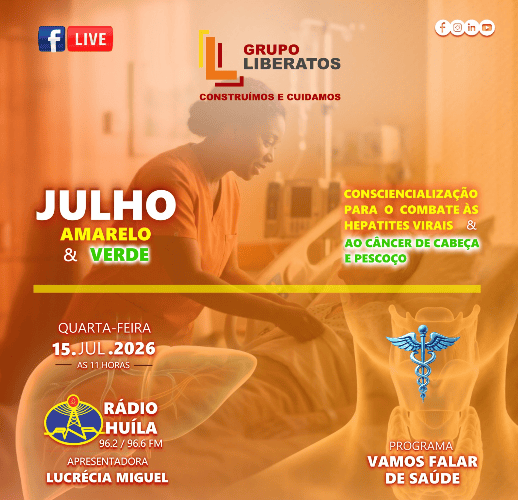
O Grupo Liberatos tem reforçado o seu compromisso com a comunidade através da promoção da saúde e da prevenção de doenças. Uma das iniciativas que traduz este compromisso é o programa “Vamos Falar de Saúde”, transmitido pela Rádio Huíla e pelas plataformas digitais do Grupo Liberatos.
Ao longo das edições de Julho, médicos especialistas abordaram temas importantes para a saúde das famílias. Entre eles estão a insuficiência renal, os hábitos saudáveis, a alimentação, a vacinação e a saúde oral infantil.
Mais do que divulgar informação médica, o programa aproxima os especialistas da população. Além disso, incentiva cada cidadão a adoptar comportamentos que podem contribuir para uma vida mais saudável.
Promover uma cultura de prevenção
As cinco edições apresentam uma mensagem comum: prevenir é uma das formas mais eficazes de proteger a saúde.
Na abordagem sobre insuficiência renal, o especialista explicou como a doença pode evoluir de forma silenciosa. Por isso, destacou a importância das consultas médicas e dos exames de rotina.
Esta mensagem pode ajudar a população a reconhecer a importância do acompanhamento regular. Da mesma forma, pode incentivar a procura atempada de assistência médica perante sinais de alerta.
A prevenção ganha ainda maior importância quando se fala de doenças crónicas. Muitas delas podem desenvolver-se durante anos sem sintomas evidentes. Assim, a informação ajuda as pessoas a compreender os riscos e a tomar decisões mais conscientes.
Incentivar hábitos mais saudáveis
As entrevistas também colocaram em destaque a importância dos hábitos diários.
Os especialistas falaram sobre alimentação equilibrada, actividade física, hidratação, descanso e saúde mental. Também alertaram para os riscos associados ao sedentarismo e ao consumo excessivo de açúcar, sal e gorduras saturadas.
Na edição dedicada ao peso saudável, a médica explicou que não existe um único peso ideal para todas as pessoas. O estado de saúde depende de vários factores, incluindo idade, altura e características individuais.
Além disso, a especialista apresentou recomendações simples para uma alimentação equilibrada. Entre elas estão o consumo de frutas, vegetais, cereais integrais, leguminosas e proteínas magras.
Estas orientações têm um importante valor social. Afinal, muitas mudanças começam com pequenas decisões tomadas diariamente. Escolher melhor os alimentos, beber água e praticar actividade física são exemplos de hábitos que podem contribuir para a prevenção de várias doenças.
Reforçar a importância da vacinação
A vacinação constituiu outro tema de grande relevância para a população.
Durante a entrevista, a especialista explicou o papel das vacinas na prevenção de doenças graves. Também apelou às famílias para que mantenham actualizado o calendário nacional de vacinação.
A mensagem assume particular importância junto dos pais e encarregados de educação. Ao conhecerem melhor os benefícios da vacinação, as famílias podem procurar os serviços de saúde com maior confiança.
Por outro lado, a informação ajuda a combater mitos e desinformação. A procura de orientação junto de profissionais de saúde permite esclarecer dúvidas antes de tomar decisões que possam afectar a protecção das crianças e dos adultos.
Deste modo, o programa contribui para reforçar a consciência de que a vacinação protege o indivíduo e também ajuda a proteger a comunidade.
Cuidar da saúde oral desde a infância
A saúde oral infantil recebeu igualmente atenção no programa.
A especialista alertou para os riscos da falta de higiene oral nas crianças. Entre esses riscos estão as cáries, as dores, as infecções e a perda precoce dos dentes.
Por isso, recomendou a escovagem regular, uma alimentação equilibrada e consultas periódicas ao médico dentista. Também explicou a importância de ensinar as crianças a cuidar correctamente dos dentes e da língua.
Estas práticas podem parecer simples. No entanto, ajudam a criar hábitos que acompanham a criança ao longo do seu desenvolvimento.
Assim, a educação para a saúde oral representa também um investimento no bem-estar das futuras gerações.
Informação acessível para a comunidade
Um dos principais impactos sociais do “Vamos Falar de Saúde” está na forma como o programa aproxima o conhecimento médico da população.
A rádio permite que estas informações cheguem directamente às famílias. Ao mesmo tempo, as plataformas digitais ampliam o acesso aos conteúdos e permitem rever as entrevistas.
A participação de especialistas acrescenta ainda maior credibilidade às mensagens transmitidas. Os profissionais explicam conceitos médicos numa linguagem acessível e apresentam recomendações que a população pode compreender e aplicar no dia-a-dia.
Desta forma, o programa contribui para aumentar a literacia em saúde na comunidade. Uma população mais informada consegue compreender melhor os riscos, identificar sinais de alerta e procurar ajuda profissional quando necessário.
Um impacto que ultrapassa a emissão
O valor social destas iniciativas não termina quando o programa chega ao fim.
Uma informação partilhada na rádio pode despertar uma família para a importância de uma consulta. Uma recomendação sobre alimentação pode incentivar mudanças dentro de casa. Um esclarecimento sobre vacinação pode levar um pai ou uma mãe a procurar um posto de vacinação.
Da mesma forma, uma orientação sobre higiene oral pode ajudar uma criança a criar hábitos mais saudáveis.
Por isso, o impacto do programa deve ser entendido também através das mudanças que a informação pode estimular na vida das pessoas.
“Construímos e Cuidamos”
Com o lema “Construímos e Cuidamos”, o Grupo Liberatos reforça uma visão de responsabilidade social que vai além da actividade empresarial.
Construir também significa contribuir para uma comunidade mais informada. Cuidar significa promover conhecimento que ajude as pessoas a proteger a sua saúde.
Neste sentido, o “Vamos Falar de Saúde” tornou-se uma ferramenta de sensibilização e educação para a população da Huíla. Através do diálogo com profissionais de saúde, o programa leva informação útil às famílias e incentiva uma atitude mais preventiva.
As cinco edições mostram, assim, que a comunicação pode desempenhar um papel importante na promoção da saúde pública.
Informar é prevenir. Prevenir é cuidar. E cuidar da comunidade é também uma forma de construir uma Huíla mais saudável, consciente e resiliente.
Information that prevents and transforms: the social impact of “Let’s Talk About Health” in Huíla
The Liberatos Group has reinforced its commitment to the community through health promotion and disease prevention. One of the initiatives that reflects this commitment is the program “Let’s Talk About Health”, broadcast on Radio Huíla and the Liberatos Group’s digital platforms.
Throughout the analyzed editions, specialist doctors addressed important topics for family health. These include kidney failure, healthy habits, nutrition, vaccination, and children’s oral health.
More than just disseminating medical information, the program brings specialists closer to the population. Furthermore, it encourages each citizen to adopt behaviors that can contribute to a healthier life.
Promoting a culture of prevention
The five editions present a common message: prevention is one of the most effective ways to protect health.
In the discussion about kidney failure, the specialist explained how the disease can progress silently. Therefore, he highlighted the importance of medical consultations and routine check-ups.
This message can help the population recognize the importance of regular check-ups. Similarly, it can encourage the timely seeking of medical assistance when warning signs appear.
Prevention becomes even more important when it comes to chronic diseases. Many of them can develop over years without evident symptoms. Thus, information helps people understand the risks and make more informed decisions.
Encouraging Healthier Habits
The interviews also highlighted the importance of daily habits.
Experts discussed balanced nutrition, physical activity, hydration, rest, and mental health. They also warned about the risks associated with sedentary lifestyles and excessive consumption of sugar, salt, and saturated fats.
In the edition dedicated to healthy weight, the doctor explained that there is no single ideal weight for everyone. Health status depends on several factors, including age, height, and individual characteristics.
Furthermore, the expert presented simple recommendations for a balanced diet. These include the consumption of fruits, vegetables, whole grains, legumes, and lean proteins.
These guidelines have significant social value. After all, many changes begin with small decisions made daily. Choosing better foods, drinking water, and engaging in physical activity are examples of habits that can contribute to the prevention of various diseases.
Reinforcing the importance of vaccination
Vaccination was another topic of great relevance to the population.
During the interview, the specialist explained the role of vaccines in preventing serious diseases. She also appealed to families to keep the national vaccination schedule up to date.
This message is particularly important for parents and guardians. By better understanding the benefits of vaccination, families can seek health services with greater confidence.
On the other hand, information helps to combat myths and misinformation. Seeking guidance from health professionals allows for clarification of doubts before making decisions that may affect the protection of children and adults.
In this way, the program contributes to reinforcing the awareness that vaccination protects the individual and also helps to protect the community.
Taking Care of Oral Health from Childhood
Children’s oral health also received attention in the program.
The specialist warned about the risks of poor oral hygiene in children. These risks include cavities, pain, infections, and premature tooth loss.
Therefore, she recommended regular brushing, a balanced diet, and periodic visits to the dentist. She also explained the importance of teaching children how to properly care for their teeth and tongue.
These practices may seem simple. However, they help create habits that accompany the child throughout their development.
Thus, oral health education also represents an investment in the well-being of future generations.
Accessible Information for the Community
One of the main social impacts of “Let’s Talk About Health” is how the program brings medical knowledge closer to the population.
Radio allows this information to reach families directly. At the same time, digital platforms broaden access to content and allow for reviewing interviews.
The participation of specialists adds even greater credibility to the messages transmitted. Medical professionals explain medical concepts in accessible language and present recommendations that the public can understand and apply in their daily lives.
In this way, the program contributes to increasing health literacy in the community. A more informed population can better understand the risks, identifying warning signs and seeking professional help when necessary.
An impact that goes beyond the broadcast
The social value of these initiatives doesn’t end when the program finishes.
Information shared on the radio can awaken a family to the importance of a consultation. A recommendation about nutrition can encourage changes at home. An explanation about vaccination can lead a parent to seek out a vaccination center.
Similarly, guidance on oral hygiene can help a child develop healthier habits.
Therefore, the program’s impact should also be understood through the changes that the information can stimulate in people’s lives.
“We Build and We Care”
With the motto “We Build and We Care”, the Liberatos Group reinforces a vision of social responsibility that goes beyond business activity.
Building also means contributing to a more informed community. Caring means promoting knowledge that helps people protect their health.
In this sense, the “Let’s Talk About Health” program has become a tool for raising awareness and educating the population of Huíla. Through dialogue with health professionals, the program brings useful information to families and encourages a more preventative attitude.
The five editions thus show that communication can play an important role in promoting public health.
Informing is preventing. Preventing is caring. And caring for the community is also a way to build a healthier, more conscious and resilient Huíla.